What Makes the Brixton Carter - Lee Square a Special Legacy Project
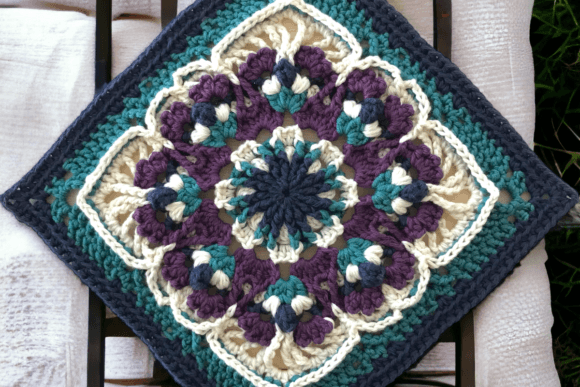
When you create something meant to last beyond your own lifetime, every stitch carries meaning. The Brixton Carter - Lee Square is not just another crochet motif. It is the tenth square in a series designed as a personal legacy for the designer's grandchildren. That intention alone sets it apart from the hundreds of granny squares and afghan blocks you might find in a pattern database. Named after a child who is described as handsome, charming, energetic, and quick-witted with a love for sports and bugs, this square carries personality and story in every loop and post stitch.
If you are considering working with this square, whether for a blanket, a pillow, or a wall hanging, you are likely drawn to projects that feel meaningful. But working on a legacy piece also introduces challenges that ordinary squares do not. Yarn choices, gauge decisions, color placement, and even the way you weave in ends can affect whether your finished work holds up for decades or starts to show wear within a few years. Understanding where mistakes commonly creep in will help you honor the intention behind the design while creating something you and your family can treasure.
What Exactly Is the Brixton Carter - Lee Square?
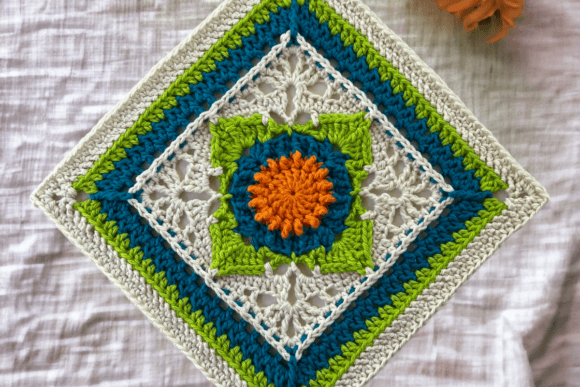
This square is a crochet motif worked in US terminology at an intermediate skill level. Depending on your hook choice, the finished size can be approximately 11 inches with a 4.5 mm hook or 12 inches with a 5.00 mm hook. The yarn requirement falls between 150 and 200 yards, which makes it a moderate project in terms of material investment. You will need stitch markers and a darning needle to complete it neatly.
The square belongs to a series of ten, each created as a legacy for the designer's grandchildren. That means each square likely carries distinct stitch patterns, color combinations, or construction details that reflect the personality of the grandchild it represents. For Brixton Carter-Lee, the square is designed to capture the energy, charm, and quick wit described in the pattern notes. You are not just making a square. You are making a keepsake.
What draws many crocheters to this square is the combination of structural interest and sentimental weight. It is not a mindless repeat. It asks for attention to detail, and that attention is exactly what makes the finished piece worth passing down.
Mistake 1: Choosing the Wrong Hook Size and Not Checking Gauge
One of the most common oversights with the Brixton Carter - Lee Square is assuming any hook close to the recommended size will produce an acceptable result. The pattern specifies clear finished sizes at two hook options. Using a 4.5 mm hook should yield an 11-inch square, while a 5.00 mm hook should produce a 12-inch square. But those numbers assume your tension matches the designer's.
If your personal tension is tighter, your square will come out smaller. If you crochet loosely, it will be larger. That might not matter if you are making a single standalone piece. But if you intend to join this square with others from the series, or if you plan to add borders and a backing, size discrepancies become obvious. They affect seam alignment, border fit, and the overall geometric integrity of the finished object.
How to Avoid This
Make a gauge swatch before you begin. Work a small section of the pattern repeat, measure it, and adjust your hook up or down until you match the specified dimensions. Write down your actual gauge and keep it with your project notes. If you are making multiple squares, check gauge again as you go. Tension can shift over the course of a large project, especially if you take breaks or switch between working sessions.
Mistake 2: Skimping on Yarn Quality for a Legacy Piece
Because the yarn requirement is only 150 to 200 yards per square, it can be tempting to use leftover stash yarn or choose a budget option. That is fine for a practice square or a quick gift, but a legacy project deserves more consideration. Yarn that pills, fades, or stretches out of shape within a few years undermines the entire purpose of making something to pass down.
Yarn choice also affects how the stitch patterns read. The Brixton Carter - Lee Square includes post stitches and texture that show best with good stitch definition. A soft, fuzzy acrylic might blur those details. A tightly twisted wool or a high-quality cotton blend will hold the shape and reveal the structure clearly.
How to Avoid This
Choose yarn that is durable, colorfast, and appropriate for the intended use. If the square will become part of a blanket, consider machine-washable fibers that can handle regular care. Check the yardage and dye lot carefully. If you need multiple skeins to complete the series, buy all the yarn at once from the same dye lot to avoid color variation. Treat the yarn as an investment in the story you are telling through the square.
Mistake 3: Ignoring the Intermediate Skill Level Rating
This square is not a beginner pattern. The intermediate rating means you should be comfortable with stitch patterns that require attention, counting, and possibly some shaping or construction steps that are not purely repetitive. Attempting this square without the necessary experience can lead to frustration, uneven tension, or mistakes that are hard to fix without frogging significant sections.
Some crocheters assume that "square" means simple. But the Brixton Carter - Lee Square is designed to reflect a lively personality, and that often translates into stitch combinations that keep you engaged. If you have only made basic granny squares or straight rows of double crochet, you might find the rhythm unfamiliar.
How to Avoid This
Be honest about your current skill level. If you have not worked post stitches, joined complex rounds, or followed a multi-step pattern before, practice on a simpler square first. Watch video tutorials for any technique that feels new. Read the entire pattern before you pick up your hook so you understand where the challenging sections occur. There is no shame in growing into a pattern. Rushing into it without preparation rarely produces the legacy-quality result you want.
Mistake 4: Overlooking the Legacy Context and Personal Meaning
Because this square is part of a series designed for grandchildren, some makers treat it purely as a technical exercise. They focus on the stitches and the dimensions but ignore the emotional layer that makes the project special. That is understandable if you are making the square for yourself and have no connection to the original namesake. But if you are creating this square as a gift, a keepsake, or part of your own family legacy, neglecting the story behind it is a missed opportunity.
The designer named the square after a child who loves sports and bugs, who is described as energetic and quick-witted. Those details can inspire color choices, border treatments, or even the way you present the finished piece. A blanket that incorporates this square could use colors that remind your family of a specific grandchild's favorite team or their enthusiasm for exploring outdoors. The square is not just a shape. It is an invitation to tell a story.
How to Avoid This
Before you start, ask yourself who this square is for and what you want it to communicate. If you are making it for your own grandchild, choose colors that reflect their personality. If you are making it as a tribute or a memorial piece, consider adding a small personalized detail like an embroidered initial or a special border stitch. Write a short note about the project and tuck it into the finished piece so future generations know why it was made. That turns a crochet square into a family heirloom.
Mistake 5: Neglecting Finishing Details That Affect Longevity
Weaving in ends, blocking, and seam finishing are not glamorous steps, but they determine whether the Brixton Carter - Lee Square holds together for decades or starts to unravel or warp after a few washes. With only 150 to 200 yards of yarn per square, the number of ends may be manageable, but each one needs to be secured properly. Loose ends that work their way to the surface ruin the clean look of the pattern and can cause stitches to pull out.
Blocking is another step that is often skipped or done hastily. Because this square includes textured stitches, blocking helps even out the tension and makes the square lay flat. An unblocked square may look slightly distorted, and that distortion multiplies when you try to join multiple squares together.
How to Avoid This
Weave in ends with a darning needle, following the path of the stitches so the tail is hidden and secure. Leave a tail long enough to weave in at least three directions. Block each square as soon as it is finished. Wet block or steam block according to the yarn fiber, and pin the square to the correct dimensions while it dries. Measure diagonally from corner to corner to ensure the square is truly square and not a rhombus. Patience during finishing separates a project that looks handmade from one that looks homemade in the best sense of the word.
Mistake 6: Assuming All Squares in the Series Are Interchangeable
Because this is the tenth square in a series, you might assume all ten squares use the same construction method and can be joined seamlessly without planning. That is not necessarily true. Each square is designed to reflect a specific grandchild, and the patterns may vary in stitch count, shape, border style, or size. Even if the finished dimensions are similar, the way stitches align at the edges can differ.
If you are collecting the entire series or making multiple squares from it, take the time to compare the edge stitch counts and construction notes for each square before you start joining them. Forcing pieces together without adjusting borders or adding a unifying joining method can result in a wavy, uneven blanket that does not do justice to the individual squares.
How to Avoid This
Plan the layout and joining method early. Consider adding a consistent border to every square before joining, using the same yarn and stitch pattern for each border. That creates a visual and structural buffer that helps absorb minor size differences. Test-join two squares before committing to the full assembly. If the fit is not clean, adjust your border or choose a joining technique that allows for slight flexibility, such as a flat braid join or a single crochet seam.
What to Check Before You Begin
Before you buy yarn or pick up your hook for the Brixton Carter - Lee Square, run through a short checklist. First, confirm your skill level matches the pattern demands. Second, choose a yarn that is durable and washable. Third, get the correct hook size and make a gauge swatch. Fourth, read the entire pattern from start to finish so no surprises catch you mid-round. Fifth, decide how this square fits into your larger project if it is not a standalone piece. Sixth, set aside time for finishing steps like blocking and weaving in ends. Seventh, think about the story you want the square to tell and let that guide your material and color choices.
Taking these steps before you start will save you from the frustration of ripping out rows, the disappointment of a square that does not fit, or the regret of a project that does not hold up over time. Legacy projects deserve that level of care.
The Brixton Carter - Lee Square is more than a pattern. It is a piece of someone's family history, and by making it, you add your own chapter to that story. Whether you are creating it for a grandchild of your own, as a gift, or simply as a meaningful addition to your crochet practice, treat the process with the respect it deserves. Choose your materials thoughtfully. Pay attention to the details that affect longevity. Honor the personality behind the name. And when you finish that last stitch, you will have something that lasts far longer than the time it took to make it.