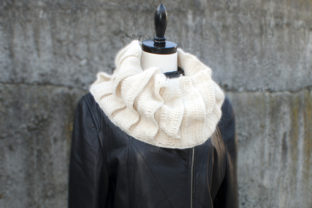
Nesting Cowl Crochet Pattern
There is something quietly addictive about a project that looks far more complicated than it actually is. The Nesting Cowl Crochet Pattern delivers exactly that effect. At first glance, the continuous flow of ruffles along the entire length of the cowl suggests intricate shaping and advanced techniques. But the reality is refreshingly different. Simple stitches, combined in a thoughtful sequence, create visually interesting and texturally elegant ruffles that feel substantial without being heavy. For anyone who loves accessories that make a statement, this pattern offers a satisfying balance of effort and impact.
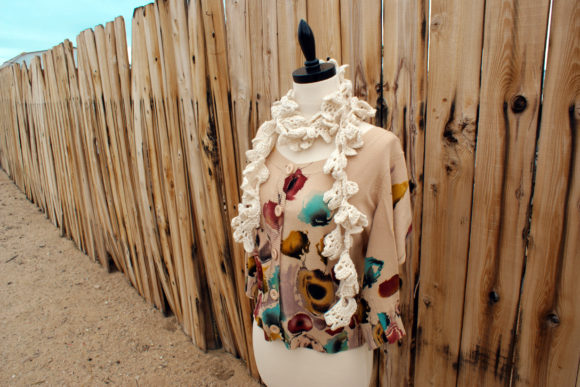
The cowl itself has a personality that is both playful and refined. The ruffles are not stiff or overly frilly. They cascade softly, creating a rhythmic wave that feels organic rather than manufactured. Whether worn loose and wide around the neck or doubled up for a snug, skinny fit, the piece adapts to the wearer's style. Doubled up, the ruffles stack and compress, giving a dense, textured look that works beautifully under a coat. Worn full length, the cowl drapes with an easy, boho elegance that can dress up a simple t-shirt or add polish to a sweater. This versatility is what makes the pattern a strong addition to any maker's library, whether you are designing for yourself, selling finished pieces, or building a portfolio of patterns.
Where the Nesting Cowl Shines
This pattern works well across a wide range of creative and commercial applications. For small business owners who sell handcrafted goods, the Nesting Cowl is a strong inventory item. The visual appeal catches customer attention at markets or in online listings, while the easy skill level means you can produce multiple pieces without burning out. The texture photographs beautifully, which is a real advantage for social media graphics and product shots. The ruffles catch light and shadow, creating depth that flat knit or basic crochet pieces often lack.
For publishers and bloggers who create crochet content, this pattern is excellent for tutorials, video walkthroughs, or printable PDF offerings. The stitch combination is straightforward enough to teach to beginners, yet the finished result is impressive enough to satisfy more experienced makers looking for a quick, satisfying project. Pattern testers and crochet designers will appreciate how the continuous ruffle construction eliminates the need for seaming multiple pieces, which is a major time saver and reduces potential weak points in the finished garment.
Content creators in the craft space can also use the Nesting Cowl as a recurring design asset. It works as a standalone piece, but it also pairs well with matching hats, wrist warmers, or even a simple scarf variation. Offering a matching set gives your audience a reason to return for complementary patterns. From a brand identity standpoint, having a signature accessory pattern that is recognizably yours can help establish authority in the crochet design market. The Nesting Cowl, with its distinctive ruffle texture, has that kind of memorable quality.
Why Simplicity Works in Design and Production
One of the most practical aspects of this pattern is how it handles visual hierarchy and texture without overcomplicating the construction. In crochet design, there is often a temptation to use complex stitch combinations to achieve a premium look. But the Nesting Cowl proves that thoughtful repetition of basic stitches can produce something genuinely elegant. The ruffles create a natural rhythm that guides the eye along the cowl's length. This makes the piece visually engaging from every angle, which is important for a wearable item that will be seen in motion.
For designers and entrepreneurs who value consistency in their work, this pattern is a reliable building block. Because the stitch pattern is consistent and easy to memorize, production quality remains uniform across multiple pieces. This is critical if you are selling finished cowls or licensing the pattern to other makers. Customers expect every piece to look like the sample photo. The Nesting Cowl delivers that consistency without requiring constant pattern checking or complicated stitch counts.
The pattern also scales well. Adjusting the width or length is simple, which opens up possibilities for custom orders or sizing variations. You can make a child's version, a longer infinity scarf, or even a wider shawl-like cowl using the same stitch pattern. This kind of flexibility adds long-term value to the pattern as a design asset.
Choosing and Working with the Nesting Cowl Pattern
When evaluating this pattern for your own projects, consider the yarn weight and fiber content carefully. The ruffle effect relies on the stitches having enough structure to stand out, but also enough drape to flow naturally. A worsted weight or aran weight yarn in a smooth fiber like merino wool, superwash wool, or a soft acrylic blend works well. Avoid overly fuzzy yarns that will obscure the stitch definition, as the ruffles rely on clear stitch separation to maintain their visual impact. Solid or semi-solid colors tend to showcase the texture better than heavily variegated or speckled yarns, which can compete with the ruffle pattern.
If you are publishing the pattern or teaching it to others, consider including a gauge swatch note even though the cowl is forgiving. Gauge matters less for a cowl than for a fitted garment, but including it adds professionalism and helps less experienced makers understand how tension affects the final look. The pattern itself uses basic stitches that most crocheters will know: chain, single crochet, double crochet, and slip stitch. But the way they combine to form the ruffles is unique. Explaining the "why" behind the stitch sequence helps makers understand the pattern rather than just following it blindly, which builds confidence and reduces errors.
Practical Pairing and Styling Ideas
The Nesting Cowl pairs well with simple, structured garments. A leather jacket, a wool coat, or a denim jacket all provide a clean backdrop that lets the ruffle texture stand out. In product photography, styling the cowl with neutral colors and minimalist accessories helps the texture take center stage. For social media content, close-up shots that focus on the ruffles and their shadow play generate strong engagement. Video content showing the cowl being doubled up or allowed to hang full length demonstrates its versatility and encourages viewers to imagine wearing it themselves.
For makers who sell finished items, consider offering the cowl in two or three colorways that reflect seasonal trends. Deep jewel tones for fall and winter, softer pastels or bright neutrals for spring, and crisp whites or creams for year-round wear. This approach reduces decision fatigue for customers and creates a curated feel that supports a consistent brand identity.
On a practical level, this pattern is excellent for packaging design and display. Because the cowl has a consistent shape and texture, it folds neatly and retains its structure. This makes it easy to photograph, pack for shipping, and display at craft fairs or retail pop-ups. If you are building a cohesive product line, the Nesting Cowl can serve as an anchor piece that ties together other accessories through texture, color, or stitch language.
Readability, Licensing, and Commercial Use
While the pattern itself is straightforward, the way you present it matters. Clear, well-edited pattern text with numbered rows or rounds and stitch counts in parentheses improves readability. If you are offering a PDF version, include a printer-friendly option without heavy background graphics. Accessibility features like larger font options or high-contrast formatting also expand your audience. This aligns with Google's Helpful Content principles by prioritizing user experience and practical value over flashy presentation.
If you are selling finished items made from the Nesting Cowl pattern, check the commercial licensing terms. Many independent designers allow the sale of finished products made from their patterns, but some require a separate commercial license. If you are a small business owner or entrepreneur, respecting these terms builds trust within the design community and protects you legally. If you are the pattern designer, clearly stating your commercial use policy at the point of sale prevents confusion and supports long-term customer relationships.
For those using this pattern as a design asset for publishing or teaching, consider documenting your process. Photos or diagrams showing the ruffle formation step by step add significant value for learners. Video tutorials that walk through the first few rows or rounds help visual learners get past any initial hesitation. Offering multiple learning formats within your content strategy increases your reach and positions you as a thorough, reliable resource in the crochet community.
The Nesting Cowl pattern is a strong example of how simple design principles can produce sophisticated results. Its easy skill level makes it accessible, while its visual impact makes it memorable. Whether you are making one for yourself, building inventory for your shop, or designing content for your audience, this pattern offers real-world value that keeps people coming back for more. The continuous ruffles are not just a design feature; they are a conversation starter, a styling tool, and a testament to the idea that you do not need complicated techniques to create something truly beautiful.