The Mountains Are Calling Cross Stitch: Crafting a Timeless Outdoor Motif
Few phrases capture the pull of the wilderness as succinctly as The Mountains Are Calling Cross Stitch designs. These patterns transform a beloved quotation into a tactile, handmade piece of art. The appeal lies not only in the sentiment but in the process itself — stitching row by row, watching a landscape or lettered phrase emerge from black fabric. For many, the act of creating The mountains are calling and I must go cross stitch pattern becomes a quiet meditation, a way to bring the outdoors indoors while engaging hands and mind.
Whether you are a beginner looking for a manageable first project or an experienced stitcher seeking a quick, satisfying finish, this design offers something substantial. The pattern is built around full crosses only, which simplifies execution without sacrificing the visual impact of the final piece. It is a rare combination of accessibility and artistry.
What Makes This Cross Stitch Pattern Distinctive
At its core, this Travel voyage vacation quote embroidery pattern centers on a phrase that resonates with hikers, travelers, and dreamers. But the design goes beyond mere words. The layout, font choice, and spacing are carefully calibrated to create balance on the fabric. The result is a piece that feels both modern and timeless, suitable for framing in a cabin, office, or living room.
Key characteristics of The mountains are calling embroidery include:
- Exclusive use of full cross stitches: No fractional stitches, backstitching, or specialty stitches are required. This streamlines the workflow and reduces confusion.
- Clear symbol charts: The pattern provides both color and black-and-white symbol pages, allowing stitchers to choose their preferred method of tracking.
- Multiple page layouts: With four pages for each symbol type, the chart remains readable even on smaller screens or printed copies.
- Precise thread mapping: DMC brand color codes are listed, so you can source exactly the floss colors used in the original design.
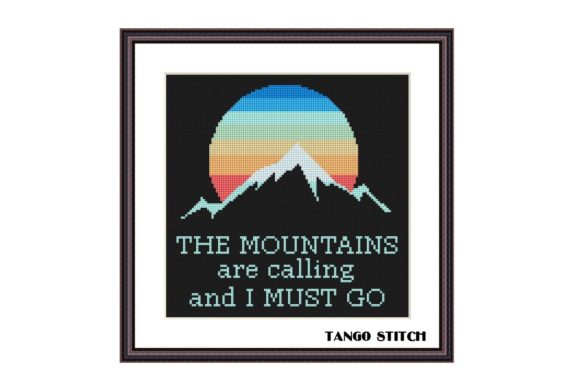
- Predictable finished size: On 14 count black Aida cloth, the stitched piece measures approximately 20 x 20 cm, making it easy to plan for framing or finishing.
This attention to detail matters because it removes guesswork. A stitcher can focus on the rhythm of needle and thread rather than interpreting ambiguous symbols or compensating for missing information.
Understanding Materials and Preparation
Before threading the first needle, gathering the right supplies ensures a smooth experience. The pattern calls for specific materials, each chosen for compatibility with the design.
Fabric Choice: Black 14 Count Aida
Black Aida cloth provides a dramatic backdrop for the stitched design. White or brightly colored floss stands out vividly against the dark weave. The 14 count — meaning 14 squares per inch — is a versatile choice. It is neither so fine that it strains the eyes nor so coarse that detail is lost. For a 20 x 20 cm design, this count yields a comfortable stitching area that fits standard hoop sizes.
Thread and Tools
The pattern references DMC brand codes, a widely available embroidery floss. Using the specified colors guarantees that the final piece matches the designer's intent. However, stitchers may substitute comparable brands if they test for colorfastness and strand thickness. Essential tools include:
- Embroidery needle with a sharp point and an eye large enough for six-strand floss
- Small, sharp scissors for trimming thread ends
- Embroidery hoop or frame to keep fabric taut
- Good lighting, especially when working with black fabric
Preparation involves cutting the fabric with at least 5 cm of margin on each side to allow for hooping and finishing. Some stitchers prefer to tape or hem the raw edges to prevent fraying during handling.
Who Benefits From This Pattern
The design intentionally bridges skill levels. Beginners gain confidence by completing a project that uses only full crosses, eliminating the intimidation of fractional stitches or complex specialty techniques. Experts appreciate the clean aesthetic and the opportunity to finish a piece quickly between larger undertakings.
Specific use cases include:
- Personal decor: Stitch it for your own wall as a daily reminder of favorite trails or future travel plans.
- Gifts for outdoor enthusiasts: A hand-stitched quote carries more meaning than a store-bought sign.
- Teaching tool: Instructors can use this pattern to teach counting, color changes, and fabric tension without overwhelming students.
- Travel journal keepsake: Complete the piece after a significant hike or vacation and display it as a memento.
- Fundraising or group projects: Because the pattern is straightforward, multiple stitchers can each work on a section and combine them later.
Educators and workshop leaders often select The Mountains Are Calling Cross Stitch for its universal theme. The phrase appeals to a wide range of learners, making it easier to sustain engagement over the duration of a class.
Stitching Workflow: From PDF to Finished Piece
Understanding the workflow helps set expectations and reduces frustration. The PDF includes several components designed to support different working styles.
- Review the main page: This shows the full embroidery image, giving you a visual target to aim for.
- Study the key page: The key maps each symbol to a DMC color code. Verify that you have all required floss before starting.
- Choose your chart format: The pattern provides color symbols (4 pages) and black symbols (4 pages). Color charts help with visual matching; black charts reduce distraction from background colors.
- Mark your starting point: Locate the center of the fabric and the center of the chart. Many stitchers use a washable fabric pen to mark grid lines.
- Begin stitching: Work from the center outward to keep the design properly positioned. Use the full cross stitch technique, ensuring all crosses face the same direction for a uniform finish.
- Manage thread tails: Weave ends under existing stitches on the back to secure them. Black fabric shows light-colored thread tails, so careful finishing matters.
- Wash and press: Once complete, gently hand wash the piece in cool water to remove oils and handling marks. Press face down on a towel, being careful not to crush the stitches.
- Frame or finish: Mount the fabric in a hoop, frame it behind glass, or sew it into a pillow or ornament.
The entire process, for a stitcher of average speed, typically takes between 10 and 20 hours depending on daily stitching time and attention to detail. Because the pattern avoids half stitches and backstitching, there is no need to pause for difficult technique changes.
Advantages of Full-Stitch-Only Designs
Patterns that rely exclusively on full crosses offer several practical benefits. First, counting errors are easier to catch and correct. When every stitch fills an entire square, the grid remains visually consistent. Second, tension issues are minimized because each stitch crosses the fabric in the same manner. Third, the finished texture is uniform, giving the piece a polished, almost woven appearance.
For The mountains are calling and I must go cross stitch pattern, the all-full-stitch approach also enhances readability of the text. Letters maintain crisp edges because there is no partial coverage blurring the outlines. This is especially important when stitching on dark fabric, where even small inconsistencies become noticeable.
Display and Finishing Considerations
A 20 x 20 cm stitched piece on 14 count black Aida offers considerable flexibility in presentation. Common finishing options include:
- Standard frame: Choose a frame that complements the rustic or adventurous theme. Dark wood, natural bamboo, or simple black frames all work well.
- Hooped display: Leave the fabric in an embroidery hoop, trim the excess, and add a backing. This creates a casual, handmade look popular in modern decor.
- Mini banner or bunting: Sew multiple small hoops together or mount the finished piece on a dowel.
- Pillow or cushion: Stitch the design onto a larger fabric panel and sew it into a throw pillow.
Because the phrase is relatively short, the design does not demand a large wall space. It fits comfortably on a bookshelf, entryway table, or above a desk. Stitchers who enjoy thematic decor often pair this piece with nature-inspired elements such as pressed leaves, topographic maps, or wooden accents.
Considerations for Working With Black Fabric
Stitching on dark fabric introduces unique challenges worth addressing. High contrast between floss and fabric helps visibility, but the dark ground can make it difficult to see thread when it passes behind the fabric. Tips for success include:
- Use a bright task light directed at the work area.
- Place a white or light-colored cloth on your lap to reflect light upward through the holes.
- Magnetic or clip-on needle minders with LED lights can illuminate individual stitching areas.
- Choose thread colors that offer strong contrast — whites, pastels, brights, or metallics work best.
- Check your stitching from the front frequently to ensure crosses are complete and uniform.
Experienced stitchers often note that black fabric shows lint and dust more readily. Frequent hand washing before final framing keeps the piece looking clean.
Adapting the Pattern for Personal Expression
While the provided design is complete and ready to use, some stitchers enjoy customizing. Because the PDF is digital, you can scale the pattern or combine it with other motifs. Ideas for personalization include:
- Add a small mountain range silhouette below the text using additional DMC colors.
- Replace the backing fabric with a patterned cotton for a mixed-media effect.
- Stitch the phrase in glow-in-the-dark floss for a nighttime accent.
- Use variegated thread for the letters to create a gradient effect.
- Embellish the frame with pinecones, twine, or map scraps.
These adaptations maintain the integrity of the original design while allowing the maker to imprint their own aesthetic. The simplicity of full stitches makes modifications easier because you can insert or subtract squares without disrupting complex stitch patterns.
Why This Pattern Resonates Across Audiences
The enduring popularity of The Mountains Are Calling Cross Stitch lies in its intersection of craft and meaning. Stitching is a slow, deliberate activity that rewards patience. The finished object carries the maker's time and attention, transforming a commercial phrase into a personal artifact. For outdoor enthusiasts, the message serves as a daily connection to places they love. For crafters who rarely hike, the design evokes curiosity and aspiration.
Business owners in the outdoor retail space have used this pattern for staff projects or window displays. Educators incorporate it into lessons on counting, color theory, or fiber arts. Researchers studying handicraft as a mental health intervention might choose this pattern for its repetitive, low-stress nature. The broad applicability makes it a versatile addition to any stitcher's library.
Ultimately, The mountains are calling X-stitch pattern delivers exactly what it promises: a clear, beautiful design that can be completed by anyone willing to pick up a needle. It respects the stitcher's time by eliminating unnecessary complexity while honoring the tradition of counted cross stitch. The 20 x 20 cm finished size is substantial enough to feel significant, yet small enough to finish without months of commitment.
Whether you stitch it alone on a quiet evening, teach it to a friend, or give it as a gift, the pattern carries the spirit of adventure. And in a world where so much is digital and ephemeral, a hand-stitched reminder to answer the call of the mountains holds lasting value.