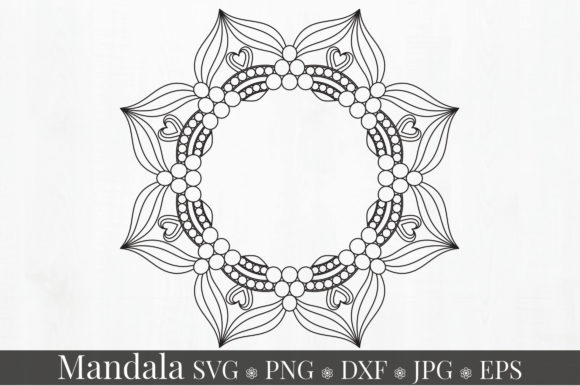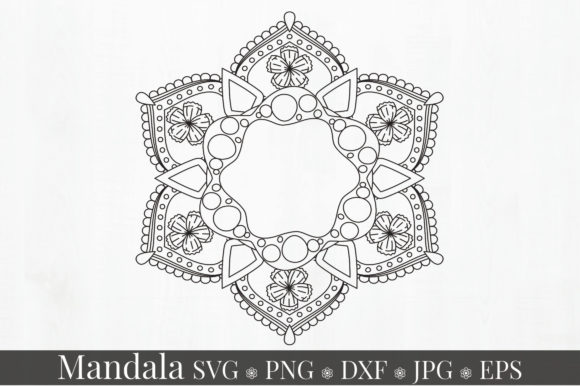
Mandala Art Circular Ornament: A Versatile Digital Asset for Creative Professionals and Entrepreneurs
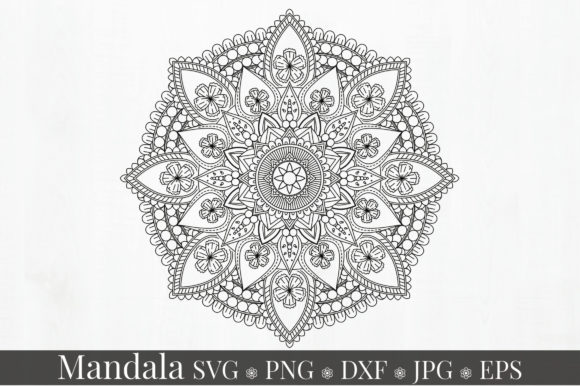
In the expanding landscape of digital design assets, few elements offer the same blend of structural precision and ornamental beauty as the mandala art circular ornament. This single vector design, isolated on a white background, is far more than a decorative motif. For professionals, creators, and small business owners who work across disciplines such as vinyl cutting, laser engraving, print production, and digital publishing, understanding how to integrate such a file into your workflow can significantly improve both efficiency and output quality.
The mandala circular lace ornament embodies a tradition of geometric symmetry combined with contemporary digital utility. When you download a package that includes SVG, DXF, PNG, JPG, and EPS formats at 300 dpi, you are not just acquiring a design. You are gaining a multi-format asset that functions across hardware platforms, software environments, and production methods. This article walks through the practical applications, workflow integration, and long-term value of this specific type of vector mandala design.
Understanding the Mandala Art Circular Ornament as a Production Asset
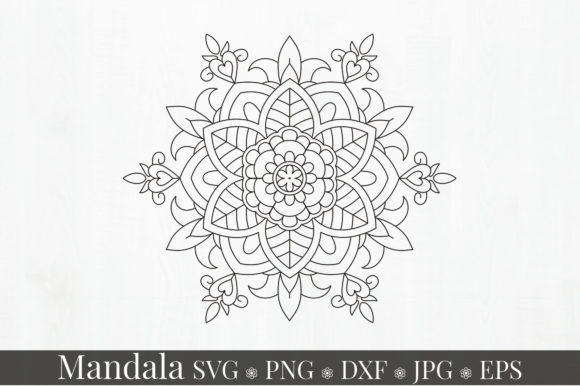
Before diving into use cases, it is important to recognize what a mandala art circular ornament represents in a professional context. It is a single, isolated vector file. That means the design is clean, scalable, and ready for manipulation without background interference. The circular symmetry present in mandala patterns lends itself especially well to repeatable processes such as cutting, printing, and etching.
This particular asset comes in five distinct file formats, each serving a different role in the production pipeline:
- SVG – Scalable Vector Graphics, ideal for design software and cutting machines like Cricut and Silhouette.
- DXF – Drawing Exchange Format, compatible with CAD software and many laser, plasma, and water jet cutters.
- EPS – Encapsulated PostScript, widely supported in professional illustration and layout tools.
- PNG – Portable Network Graphics at 300 dpi, suitable for web and print use where transparency is required.
- JPG – High-resolution 300 dpi image file for quick previews, mockups, and printing.
By providing all five formats, the asset removes the friction of file conversion and ensures that whether you are using a laser cutter or a sublimation printer, you have a version that works immediately.
How the Mandala Circular Lace Ornament Fits Into Real Workflows
The integration of a mandala circular lace ornament into your process depends largely on your industry. Below are several common scenarios where this asset delivers practical value.
Vinyl Cutting and Sign Making
For users of Cricut Design Space, Silhouette Studio, CorelDRAW, Adobe Illustrator, Inkscape, Making the Cut, or Sure Cuts A Lot, the SVG file is the primary workhorse. The mandala ornament is already isolated, meaning you can import it directly into your software and begin sizing, layering, and cutting. No background removal or tracing is required.
Tips for efficient use:
- Open the SVG in your preferred software and group or ungroup elements as needed for multi-color layering.
- Check the dimensions against your material size before cutting to avoid wasted stock.
- Use the DXF file if you are working in Silhouette Studio without the Designer Edition upgrade, as DXF import does not require that add-on.
Laser Cutting and CNC Machining
The DXF format is the standard for CNC machines, plasma cutters, laser engravers, and water jet systems. The mandala circular lace ornament is geometrically precise, making it a strong candidate for etching or cutting into wood, acrylic, metal, or paper.
Workflow considerations:
- Import the DXF into your CAM software and verify that all paths are closed and continuous. Mandala patterns often contain nested rings; ensure your toolpath settings accommodate inside and outside cuts.
- For laser engraving, use the JPG or PNG at 300 dpi as a reference for grayscale density mapping, or convert the vector directly into a raster-ready format.
- Test on scrap material first. The fine lace details of the mandala may require slower speeds or lower power settings to preserve the thin lines.
Print and Sublimation
The high-resolution PNG (300 dpi with transparency) and JPG (300 dpi) files are intended for print applications. Whether you are producing sublimation transfers, direct-to-garment prints, or paper prints for framing, the mandala ornament serves as a clean, standalone graphic that can be placed on t-shirts, mugs, bags, canvas, or phone cases.
Practical implementation:
- Open the PNG in your design software and place it over your product mockup. The transparent background allows seamless blending with any substrate color.
- For sublimation, ensure your print settings match the 300 dpi resolution. Lower resolutions will cause pixelation, especially on large items like blankets or pillows.
- Use the EPS file if you are working in Adobe Illustrator or CorelDRAW and need to scale the design without losing vector quality before converting to CMYK for print.
Before, During, and After: Placing the Mandala Ornament in Your Project Cycle
A common challenge among creative entrepreneurs and small business owners is knowing when to introduce a design asset into the project timeline. The mandala art circular ornament can serve multiple roles depending on your stage of work.
Before the project: Use the JPG or PNG as a reference image in mood boards, concept sketches, or client proposals. Because the file is isolated and high resolution, it communicates the final aesthetic clearly without requiring you to commit to cutting or printing.
During production: Load the SVG or DXF directly into your tool chain. The benefits here are speed and consistency. Because the file is already vectorized and cleaned, you skip the tracing or digitizing step entirely. This is particularly valuable when you are producing multiple items in a batch, such as wedding favors, branding collateral, or retail products.
After the project: Archive the asset for future use. Because the design is a single ornament rather than a full layout, it can be repurposed across different products. The same mandala used for a laser-cut wood sign can later be printed on a t-shirt or used as a background pattern for an invitation card.
Compatibility and Software Considerations
One of the strongest aspects of this mandala art circular ornament package is its cross-compatibility. Below is a breakdown of how each file type interacts with popular software and hardware.
- SVG files work natively with Cricut Design Space, Adobe Illustrator, CorelDRAW, Inkscape, and Silhouette Studio (with Designer Edition). They are also supported by many web-based design platforms.
- DXF files open in Silhouette Studio without the Designer Edition upgrade. They are also the standard for CAD programs and most laser cutter software, including LightBurn, RDWorks, and LaserGRBL.
- EPS files are compatible with Adobe Illustrator, CorelDRAW, and many other vector editors. Some programs may require a plugin or conversion for full support.
- PNG and JPG files at 300 dpi are universal. They open in any image editor, web browser, or print layout tool.
This breadth of compatibility means that whether you are a hobbyist using free software like Inkscape or a professional running a production shop with industrial CNC equipment, the asset fits your environment without modification.
Long-Term Use and Quality Control
Investing in a high-quality digital asset like this mandala circular lace ornament is also a decision about consistency. When you use the same source file across multiple projects, you maintain a uniform visual language across your product line. This is valuable for brands, Etsy sellers, and small manufacturers who need to establish a recognizable style.
Quality control considerations include:
- Always verify the resolution of the PNG and JPG files before scaling up. At 300 dpi, these files are suitable for prints up to a certain size. If you need a significantly larger print, revert to the vector formats (SVG, DXF, EPS) to maintain crisp edges.
- When cutting with a laser or CNC machine, inspect the DXF for any overlapping or redundant lines. While professional assets are typically clean, it is good practice to run a geometry check before starting the job.
- Store the files in a logical folder structure. Because the package includes multiple formats, keeping them organized by format type or by use case will save time when revisiting the asset months later.
Practical Use Cases Across Industries
The mandala art circular ornament is not confined to a single application. Here is a non-exhaustive list of ways professionals are integrating this asset into their work:
- Wood carving and pyrography: Use the SVG or DXF to guide a laser engraver or CNC router for decorative panels, boxes, or wall art.
- Tattoo design: The isolated vector format allows tattoo artists to resize, rotate, and combine the mandala with other elements in their design software before stencil printing.
- Sticker production: Import the SVG into a plotter or use the PNG for print-and-cut workflows. The circular shape works well for die-cut stickers.
- Paper ornament and scrapbooking: Print the JPG on cardstock or use the DXF with a die-cutting machine for intricate paper embellishments.
- Invitation and card design: Use the EPS or SVG as a decorative border or centerpiece for wedding, birthday, or luxury event invitations.
- Book covers and packaging: The mandala ornament can be scaled and positioned as a focal graphic or repeated to form a seamless pattern for backgrounds.
Observations on Efficiency and Organization
For professionals who manage multiple digital products, the way you handle file assets directly impacts your throughput. The mandala art circular ornament, being a single vector isolated on a white background, eliminates several steps that often consume time:
- No background removal is needed.
- No manual tracing from a raster image is required.
- No format conversion is necessary if you have the right file for your machine.
This means you can move from design concept to production faster. Whether you are creating a small batch of custom gifts or scaling up for an order of several hundred units, the asset supports that transition without introducing extra friction.
Final Considerations for Integrating This Asset
When you add the mandala circular lace ornament to your digital library, treat it as a foundational building block rather than a one-use design. Its geometric structure and isolated format make it suitable for combinations with other elements, such as text, monograms, or additional decorative layers. Because the rights are reserved by SkyeCreativeStudio (2020), ensure your usage respects the license terms, particularly if you plan to use the asset as part of a commercial product line.
To get the most out of this asset:
- Test each file format in your specific software environment before beginning a production run.
- Keep the original files unmodified in a master folder, and make working copies for each project.
- Experiment with scaling and rotation. Mandala designs often reveal new visual interest when placed at different sizes or angles.
The mandala art circular ornament is a precise, versatile, and production-ready vector asset. When used deliberately, it saves time, reduces errors, and elevates the visual quality of your work across cutting, printing, and digital applications. By understanding its file formats, compatibility, and placement in your workflow, you can use this single design to support a wide range of creative and commercial outcomes.