Nautical Clip Art: Navigating Creative Design with Ocean-Inspired Visual Assets
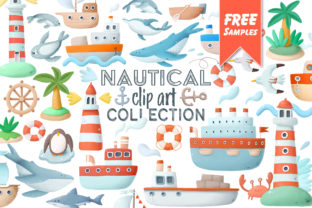
Designers, educators, content creators, and small business owners frequently search for visual assets that carry both aesthetic appeal and thematic consistency. Nautical clip art fills a specific niche in the world of digital graphics, offering maritime motifs that range from vintage ship illustrations to modern anchor icons. When you acquire a curated nautical clip art collection, you gain access to a cohesive set of images that can unify a project around a coastal, seafaring, or oceanic theme. The practical value of such a collection becomes evident the moment you begin layering elements into a poster, website banner, or educational handout.
What Defines a Professional Nautical Clip Art Collection
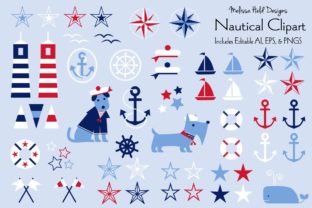
A well-assembled nautical clip art collection distinguishes itself through resolution, file format versatility, and artistic coherence. The typical premium set includes dozens of individual images, each rendered as a PNG with a transparent background. This transparency is critical because it allows you to place a lighthouse, ship wheel, or anchor directly onto any background without dealing with white boxes or messy edge artifacts. In the collection described here, you receive 53 individual PNG files, each sized at 2000x2000 pixels with a 600 DPI resolution. That level of detail means you can use these images for large-format printing, such as posters, banners, or trade show displays, without experiencing pixelation or blurriness. The 600 DPI specification is particularly relevant for print professionals who need sharp output at scale.
Beyond the individual images, the collection includes three seamless patterns, each measuring 6000x6000 pixels at 300 DPI. Seamless patterns are invaluable when you need to fill a background, wrap a product mockup, or create a repeated texture for wrapping paper, fabric design, or digital wallpapers. The 6000x6000 resolution ensures that the pattern remains crisp even when tiled across large surfaces. Having both individual clip art elements and matching patterns in one purchase eliminates the need to hunt for complementary assets across multiple sources.
Practical Applications Across Professional and Creative Contexts
The versatility of nautical clip art extends across numerous industries and use cases. A wedding planner designing a coastal-themed invitation suite can pull a vintage anchor illustration, a rope border pattern, and a subtle wave texture from the same collection, ensuring visual harmony across save-the-dates, programs, and signage. A children's book illustrator working on a story about a young sailor might use the layered PSD file to arrange multiple elements—a schooner, a compass, a seagull—on separate layers, adjusting opacity and position without destroying the original artwork. An educator creating a marine biology unit can incorporate clip art of ships, navigational tools, and oceanic symbols into worksheets, slideshows, and bulletin board displays, saving hours of custom illustration time.
Small business owners in coastal tourism, seafood restaurants, or maritime museums frequently rely on nautical clip art for menus, signage, social media graphics, and merchandise. Having a single collection that provides both standalone icons and repeating patterns streamlines brand development. You can use an anchor icon as a logo watermark, apply a rope pattern to a menu background, and feature a detailed ship illustration on a banner—all from the same source set. This consistency builds brand recognition without requiring a professional graphic designer for every asset.
Print Production and Large-Format Output
One of the standout characteristics of this nautical clip art collection is its suitability for high-end print production. The 600 DPI specification on the individual images means you can scale them significantly without degrading quality. A 2000x2000 pixel image at 600 DPI prints at roughly 3.3 inches by 3.3 inches at full resolution, but you can safely enlarge it for larger formats because the high pixel density preserves fine details. For a poster or a fabric banner, you might use the image at a lower effective DPI, but the starting resolution gives you flexibility. The seamless patterns at 6000x6000 pixels and 300 DPI are equally robust for print applications such as wrapping paper, gift boxes, tablecloths, or wallpaper samples.
Professionals who produce packaging, apparel, or promotional merchandise will appreciate that the transparent PNG files integrate directly with print-on-demand platforms. You can upload an anchor or ship graphic to a t-shirt design tool, place it on a mug mockup, or layer it into a tote bag layout without needing to manually remove a background. The transparent format also works smoothly in presentation software like PowerPoint or Keynote, where you might layer nautical elements over photographs or gradient backgrounds.
Understanding File Formats and Compatibility Considerations
When you download this nautical clip art collection, you receive 53 individual PNG files and three seamless pattern PNGs, all bundled together in one layered PSD file. The PNG format is universally supported across graphic design software, office applications, and web development tools. Programs such as Adobe Photoshop, Illustrator, GIMP, Affinity Photo, Canva, Procreate, and even basic image viewers can open and edit these files. However, the collection description includes an important note: confirm compatibility with your specific software before purchase. While PNG is a standard format, certain older or specialized programs may not handle transparency or high-resolution files optimally. It is wise to test a sample file if your workflow relies on legacy software or niche applications.
The layered PSD file adds significant value for users of Adobe Photoshop or compatible editors. In a layered PSD, each clip art element resides on its own layer, allowing you to show, hide, rearrange, and independently edit components. You might build a composite scene—a ship on the ocean with a lighthouse in the background and a compass in the foreground—by toggling visibility and adjusting layer order. The PSD also preserves the original transparency and resolution of each element, so you can export individual pieces as needed. For users who do not have Photoshop, the included PNG files provide full access to every image without requiring a specific application.
One important detail to note is that fonts are not included in this collection. If the clip art includes any text elements—such as labels on a compass rose or lettering on a ship's hull—those text elements are rasterized as part of the image. You cannot edit the font or wording after the fact. For projects that require custom typography, you will need to add your own text layers using a font you own or license separately. This is standard practice in clip art collections, but it is worth remembering if your design relies heavily on specific lettering.
Seamless Patterns for Background and Surface Design
The three seamless patterns included in this nautical clip art collection deserve special attention because they expand the creative possibilities beyond standalone icons. A seamless pattern tiles infinitely in any direction without visible seams, making it ideal for backgrounds, fabric prints, and surface designs. With dimensions of 6000x6000 pixels at 300 DPI, these patterns can cover a large area without repeating noticeably. You might use a rope pattern as a border on a certificate, a wave pattern as a backdrop for a website hero section, or an anchor pattern as a subtle texture on business cards.
Designers working in surface pattern design, textiles, or product packaging will find these patterns immediately usable. You can import the PNG pattern into Adobe Illustrator, create a pattern swatch, and apply it to any shape. In Photoshop, you can define the image as a pattern and fill layers with a single click. The high resolution ensures that even when scaled up for large-format printing, the pattern maintains its sharpness and detail. For digital use, such as website backgrounds or social media templates, the resolution is far higher than necessary, but that gives you freedom to crop and scale without losing quality.
User Workflows and Integration into Real Projects
Different users will approach this nautical clip art collection with different workflows. A graphic designer working in Adobe Photoshop might open the layered PSD file first, examine the organization of layers, and then extract specific elements for a client project. The designer could duplicate the file, hide unwanted layers, and save a subset of images as individual PNGs for web use. Alternatively, the designer might use the PSD as a master file, adding adjustment layers or effects to unify the aesthetic of multiple elements.
A hobbyist scrapbooker or DIY enthusiast might prefer the individual PNG files because they can drag and drop images directly into a layout app or word processor. Transparent backgrounds mean no awkward white rectangles around the clip art. The high resolution allows the user to print these images at various sizes for physical scrapbooking, card making, or home decor projects. The seamless patterns could be printed on adhesive paper to create custom stickers or used as digital papers in a scrapbooking software.
Educators and researchers often need visual aids that are both accurate and engaging. Nautical clip art depicting historical ships, navigational instruments, and maritime symbols can enhance presentations on exploration, trade routes, or marine science. The transparent PNG format works well in Google Slides, Microsoft PowerPoint, and Keynote, where images can be overlaid on maps or diagrams. The high resolution ensures that when projected on a large screen, the details remain visible and professional.
Advantages of a Consolidated Collection versus Individual Purchases
Buying a single nautical clip art collection that includes 53 images and three patterns offers several practical advantages over sourcing assets individually. First, the visual consistency across all elements means you do not have to mix styles from different artists or collections. A vintage engraved anchor will pair naturally with a vintage compass and a rope border because they share similar line quality, shading, and color palette. This consistency is difficult to achieve when pulling free resources from multiple online libraries.
Second, the cost and time savings are considerable. Searching for, downloading, and organizing individual clip art files can consume hours, especially when you need a cohesive set. A consolidated collection arrives as one download, organized in a single PSD and a folder of PNGs, ready to use. The inclusion of both individual images and matching patterns further reduces the need to hunt for complementary backgrounds.
Third, the high-resolution specifications make this collection suitable for both digital and print projects. Many free or low-cost clip art sets offer only 72 DPI images that look fine on screen but fail in print. At 600 DPI for images and 300 DPI for patterns, this collection meets professional print standards. Users who produce both web and print materials can rely on the same assets for both mediums without quality loss.
Observations on Creative Implementation
Experienced designers often observe that the best results come from combining clip art elements in unexpected ways. A single anchor icon might feel generic, but layering it with a rope pattern, a compass rose, and a subtle wave texture transforms it into a rich composition. The layered PSD format encourages this kind of experimentation because you can try different combinations without permanently altering the originals. You might place a ship silhouette behind a semi-transparent compass, or use a pattern as a clipping mask for a shape. The transparent PNGs also allow you to import elements into vector software, trace them, and convert them to scalable vector graphics if needed.
For users who produce video content, such as YouTube tutorials or social media reels, nautical clip art can serve as overlay graphics, title backgrounds, or transitional elements. The PNG files with transparent backgrounds are directly usable in video editing software like Adobe Premiere, Final Cut Pro, or DaVinci Resolve. You can animate an anchor swinging or a ship sailing across the screen by keyframing position and rotation. The high resolution ensures that even when scaled up within a video frame, the clip art remains sharp.
Considerations Before Purchasing a Nautical Clip Art Collection
Before committing to any clip art collection, it is prudent to evaluate a few factors. File compatibility is paramount: while PNG is a universal format, the layered PSD requires software that supports Photoshop layers. If you use Affinity Photo, GIMP, or Clip Studio Paint, confirm that these applications can open PSD files reliably. The high resolution of 2000x2000 pixels at 600 DPI may also pose challenges for older computers or limited storage, as each file is correspondingly large. Ensure your system can handle files of this size, especially if you plan to work with multiple images simultaneously.
The absence of included fonts is another consideration. If your project requires custom text integrated with the clip art—such as a label on a map or a title on a poster—you will need to source and add your own fonts. The clip art itself is ready to use, but any text in the images is baked in and cannot be edited. This is standard for clip art collections, but it is worth noting for users who expect editable text layers.
Finally, consider the stylistic range of the collection. A set focused on nautical themes may include anchors, ships, compasses, ropes, lighthouses, waves, fish, and nautical stars. Before purchasing, review the sample images or list of included elements to ensure the collection covers the specific motifs you need. If your project requires a very particular type of vessel or a specific navigational instrument, confirm that the collection includes that element. A well-rounded collection will provide enough variety to support multiple projects, from branding to education to personal crafting.
In practice, a premium nautical clip art collection with 53 high-resolution images and three seamless patterns serves as a substantial resource for anyone working with maritime themes. The combination of transparent PNGs, a layered PSD, and print-grade resolution makes it suitable for a wide range of professional and personal applications. By understanding the characteristics of the files, the workflows they support, and the creative possibilities they unlock, users can make informed decisions and get the most value from their investment.