Mastering the Scottie Dog Corner to Corner Throw: Design, Technique, and Finishing
When a crochet project calls for both precision and personality, the Scottie Dog Corner Toc Orner Throw stands out as a rewarding challenge for makers at every skill level. This particular design, built around the iconic silhouette of the Scottish terrier, transforms a classic corner-to-corner (C2C) blanket into a statement piece that delights pet lovers and textile enthusiasts alike. Understanding the interplay between block count, gauge, yarn weight, and hook size is essential to achieving the intended dimensions, especially when working with double knit yarn and a 5 mm hook.
The Unique Appeal of a Scottie Dog Motif in C2C Crochet
The Scottish terrier, with its distinct profile, erect ears, and sturdy stance, translates remarkably well into the pixelated grid of corner-to-corner work. Unlike abstract geometric patterns, a recognizable animal motif adds narrative value to a throw. The Scottie Dog Corner Toc Orner Throw leverages this by using the C2C technique to build the dog image diagonally, block by block. Each block represents a single pixel, and when 80 blocks form each side of the square, the resulting image has sufficient resolution for the dog's features to remain crisp without becoming overly complex.
The C2C method itself offers advantages over traditional graphgans worked in rows. Because diagonal construction naturally shapes corners, the design avoids the awkward seam or color-change concentration often seen at the edges of square motifs. For a throw that should end up around 55 inches square when using a 5 mm hook and double knit yarn, the scottie dog, corner to corner c2c blanket throw, 80x80 blocks provides a structured yet flexible framework. The diagonal grain gives the fabric a subtle directional flow, which complements the angular lines of the terrier's form.
Why 80x80 Blocks Produce an Ideal Canine Portrait
An 80-by-80 block grid offers a sweet spot between detail and manageability. A smaller grid, such as 40x40, would force the dog into a blocky, almost unrecognizable shape. A larger grid, say 120x120, demands an enormous time investment and may yield a throw too large for practical use. With 80x80 blacks this thlow should end up around 55 inch squae when using a 5mm hooka nd double knit yarn, the finished piece is large enough to drape over a sofa or bed but compact enough to complete within a reasonable timeframe. The Scottie dog itself can occupy a central portion of the grid, leaving a border that frames the motif without overwhelming it.
Yarn Selection: Why Double Knit Matters for the Scottie Dog Throw
Double knit (DK) yarn occupies a middle ground between sport weight and worsted weight. It provides enough substance for a warm throw while maintaining stitch definition essential for a C2C graph. When working the Scottie Dog Corner Toc Orner Throw, the choice of DK weight directly affects the final size. With a 5 mm hook, DK yarn typically produces a tighter fabric than worsted weight, which helps the dog image retain its shape. The gauge for DK yarn on a 5 mm hook usually falls between 20 and 22 stitches per 4 inches in standard crochet, but in C2C, each block is roughly equivalent to a cluster stitch. In this configuration, each block measures approximately 0.69 inches, meaning 80 blocks yield about 55 inches.
- Stitch definition: DK yarn holds crisp color changes, crucial for the Scottie's dark body against a lighter background.
- Drape and weight: The resulting fabric is supple without being floppy, making the throw suitable for both display and daily use.
- Washability: Most DK acrylic or acrylic-blend yarns handle machine washing well, an important factor for a blanket likely to see regular use.
Color Palette Considerations for the Scottie Dog Motif
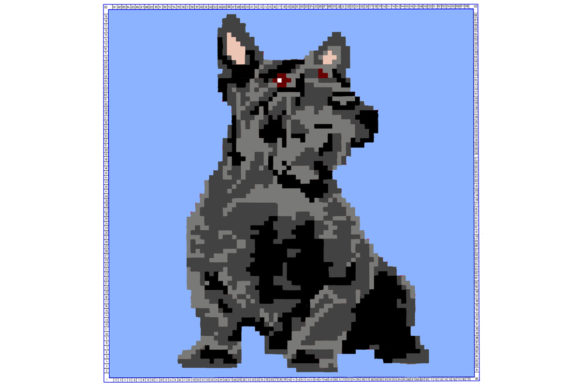
Traditional Scottie dog colors include black, grey, brindle, and wheaten. For maximum contrast in a C2C graph, a dark body against a lighter field works best. The throw described as scottie dog, corner to corner c2c blanket throw, 80x80 blacks this thlow implies a predominantly black dog on a contrasting background. Black yarn for the dog ensures the silhouette reads clearly from across a room. The background could be a soft cream, warm grey, or even a muted blue that complements the black without competing. Some makers choose to add a subtle border in a third color, such as a red or green that echoes traditional tartan accents, to tie the Scottie theme together without overpowering the central image.
Working the 5 mm Hook and Managing Gauge
The 5 mm hook (size H-8 in US sizing) is a common recommendation for DK yarn, though many crocheters naturally gravitate toward a 4.5 mm or 5.5 mm depending on tension. For the Scottie Dog Corner Toc Orner Throw, achieving a consistent gauge across the entire piece is critical. Because C2C construction involves increasing diagonally for the first half of the project, then decreasing, any tension variation will show as asymmetry in the final square. A 5 mm hook paired with DK yarn should produce blocks that are uniform in size. If you tend to crochet tightly, consider moving to a 5.5 mm hook to avoid a throw that measures significantly smaller than 55 inches. Conversely, if your tension is loose, a 4.5 mm hook may help keep the dimensions in check.
- Make a swatch: Work a small C2C square of 10 blocks by 10 blocks using your chosen yarn and hook. Measure the total width and divide by 10 to find the block size.
- Calculate dimensions: Multiply the block size by 80 to confirm you land near 55 inches. Adjust hook size if needed before starting the full project.
- Track block count: Use a row counter or graph paper to mark off each of the 80x80 blocks as you complete them. This prevents miscounting during the increase and decrease phases.
Reading the C2C Graph for the Scottie Dog
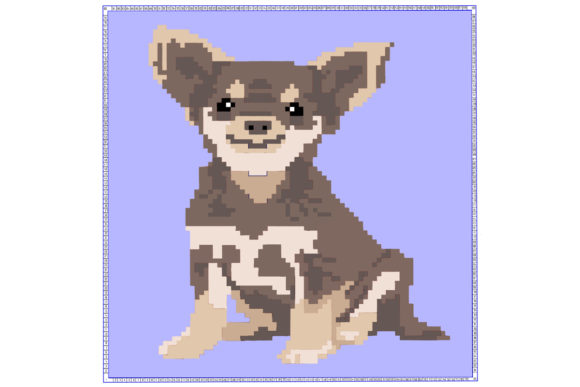
Interpreting a C2C graph requires understanding that each cell represents a diagonal block. The graph itself is a square rotated 45 degrees. For the Scottie Dog Corner Toc Orner Throw, the dog image is plotted on a grid where the bottom-left corner of the graph corresponds to the starting point of the increase section. As you work diagonally upward, you follow the graph row by row, changing colors at the appropriate cells. Many crocheters find it helpful to use a digital copy of the graph and highlight completed rows to avoid losing their place. Because black and white are the primary colors, the color changes are stark and easy to spot, reducing the likelihood of errors.
Practical Workflow for an 80x80 Block Throw
An 80x80 block throw involves 80 increase rows and 80 decrease rows, totaling 160 rows of diagonal work. For the Scottie Dog Corner Toc Orner Throw, the first 80 rows build the bottom half of the square, and the final 80 rows build the top half. During the increase phase, you add one block per row on each side. At the halfway point, the piece is a perfect right triangle. The decrease phase mirrors the increase, with the long edge of the triangle becoming the straight edge of the square.
- Increase phase: Rows 1 through 80. Each row adds one more block than the previous row. The dog image begins to take shape by row 20 or 30, depending on the graph placement.
- Decrease phase: Rows 81 through 160. Each row has one fewer block. The image completes as you approach the final rows.
- Border: After completing the 80x80 grid, a simple single crochet or crab stitch border can frame the throw and stabilize the edges.
Managing Yarn Ends and Color Changes
With an 80x80 grid containing a detailed motif, color changes happen frequently. For a black Scottie dog on a light background, you may switch colors dozens of times per row. Carrying the yarn loosely along the back of the work can reduce the number of ends to weave in, but because the dog shape involves isolated black patches interspersed with background, carrying may not be feasible over long stretches. A better approach is to use separate small bobbins for each color section. When the dog's body spans several contiguous blocks, you can carry the black yarn across the back for up to three or four blocks without it showing on the front. For longer stretches, cut the yarn and weave in ends later. The Scottie Dog Corner Toc Orner Throw benefits from careful end management because the reverse side of a C2C blanket often has a visually appealing diagonal stripe pattern, and excessive knots or loose ends detract from that aesthetic.
Finishing the 55-Inch Square Throw
Once the 80x80 blocks are complete, the throw should measure approximately 55 inches on each side. However, blocking is essential to square up the fabric and relax the stitches. Wet blocking or steam blocking works well with DK acrylic or wool blends. Pin the throw to the correct dimensions on a blocking mat, paying special attention to the corners. Because C2C naturally forms a square if gauge is consistent, only minimal stretching should be required. After blocking, weave in all remaining ends using a tapestry needle. For the scottie dog, corner to corner c2c blanket throw, 80x80 blacks this thlow, a clean finish transforms a good project into a heirloom-quality piece.
Adding a Personal Touch to the Scottie Dog Design
While the core pattern focuses on the Scottie silhouette, there is room for customization. Some makers add a tartan plaid border using thin stripes of red, green, and yellow. Others incorporate a small paw print or the dog's name in one corner using duplicate stitch. The Scottie Dog Corner Toc Orner Throw can also be adapted to a two-dog design by scaling the grid to 100x100 blocks and centering two terriers side by side. However, for the 80x80 specification, a single larger Scottie remains the most visually impactful choice. The black body, erect ears, and short legs read clearly at this scale, and the finished throw doubles as both a cozy blanket and a tribute to a beloved breed.
Real-World Use Cases for the Scottie Dog Throw
The 55-inch square size is versatile. It works as a lap blanket for reading or watching television, a decorative throw across the foot of a twin bed, or a wall hanging for a dog-themed room. For pet owners, the Scottie Dog Corner Toc Orner Throw often becomes a favorite item on the sofa, used by both people and their canine companions. Because DK yarn produces a fabric that is warm but not overly heavy, the throw can be used year-round. The black-and-white color scheme fits into modern, traditional, or farmhouse decor without clashing. Makers who sell their work find that dog breed patterns, especially for recognizable breeds like the Scottish terrier, consistently attract buyers seeking personalized gifts.
Considerations for Beginners Tackling This Pattern
While the C2C technique is beginner-friendly, an 80x80 grid with frequent color changes pushes the difficulty level to intermediate. Beginners should have a solid grasp of basic C2C increases, decreases, and color changes before attempting the Scottie Dog Corner Toc Orner Throw. Practicing on a smaller 30x30 project, such as a simple heart or geometric shape, builds confidence. Using a stitch marker to mark the midpoint of the work helps track progress. Despite the challenge, the reward is substantial: a professional-looking throw that showcases skill and patience. For educators and hobbyists teaching C2C techniques, the Scottie dog design serves as an excellent case study in graph reading, tension control, and color work.
The interplay between hook size, yarn weight, block count, and finished dimensions makes this project a masterclass in crochet planning. When all elements align, the Scottie Dog Corner Toc Orner Throw delivers exactly what it promises: a beautifully rendered terrier on a perfectly square blanket that measures 55 inches on each side.