Zip Side Tote Bag Pattern: Two Looks, One Bag, Endless Possibilities
If you enjoy sewing bags that combine function with fashion, the Zip Side Tote Bag Pattern offers a clever twist on a classic accessory. This pattern uses zippers on both sides of the tote to create one bag that can take on two completely different appearances. Whether you prefer a sleek pleather finish one day or a soft fabric look the next, this design lets you switch styles with ease. Beyond the visual versatility, the finished bag measures approximately 13 inches by 13 inches, with side zip-outs that add extra space or shape, plus optional interior pockets for organizing essentials. For anyone weighing sewing pattern options, understanding what makes this design distinct and where its tradeoffs lie can help you decide if it is the right fit for your next project.
What Makes the Zip Side Tote Bag Pattern Distinct
At its core, the Zip Side Tote Bag Pattern is built around a simple but effective concept: two identical zippers along the sides of the bag allow you to flip the tote inside out or change which material faces outward. The pattern includes a 22-page photo tutorial that walks you through each step, plus all the pattern pieces needed to cut and assemble the bag. The tutorial is detailed enough to guide you through techniques like working with zippers and layering foam interfacing, which adds structure and durability.
The finished dimensions—about 13 inches square—make it a medium-sized tote suitable for daily use, from carrying books and groceries to storing craft supplies. The side zip-outs can be left closed for a more compact shape or unzipped to expand the bag's volume or change its silhouette. Inside, you can add pockets to the lining, increasing the bag's practicality without complicating the outer design. This combination of reversible-zip styling, clear instruction, and optional customization sets this pattern apart from simpler tote patterns that offer only one look or lack structural support.
How It Compares with Other Tote Bag Patterns
When evaluating the Zip Side Tote Bag Pattern against other tote designs, several key differences emerge. Many standard tote patterns are one-sided: you sew the outer fabric, attach a lining, and the bag has a fixed appearance. Reversible tote patterns exist, but they often require you to sew a bag that can be flipped entirely inside out, which can complicate handle placement and pocket accessibility. The zip-side approach offers a middle ground. You get two looks without needing to flip the entire bag; instead, the side zippers let you swap which fabric shows on the sides and bottom while keeping handles and interior pockets in consistent positions.
Another point of comparison is material flexibility. This pattern suggests using pleather, vinyl, laminated fabric, or a combination of these for the outer sides and bottom, with quilting cotton or similar medium-weight fabric for the lining. Many tote patterns are designed specifically for quilting cotton or canvas, and they may not handle heavier materials like vinyl well without modifications. The Zip Side Tote Bag Pattern is built to accommodate both sleek and soft materials, which broadens its appeal for sewists who want to experiment with texture or create bags that transition from casual to polished.
Pattern complexity also varies. A basic tote pattern might involve just a few straight seams and simple handles, making it suitable for beginners. This zip-side pattern requires working with zippers, foam interfacing, and precise cutting—tasks that are manageable for advanced beginners or intermediate sewists but may frustrate someone who has never installed a zipper. The 22-page photo tutorial helps bridge that gap, but the learning curve is real. If you are looking for a quick one-hour project, this is not it. If you want to build skills and produce a professional-looking bag, the extra time is worthwhile.
Strengths of the Zip Side Tote Bag Pattern
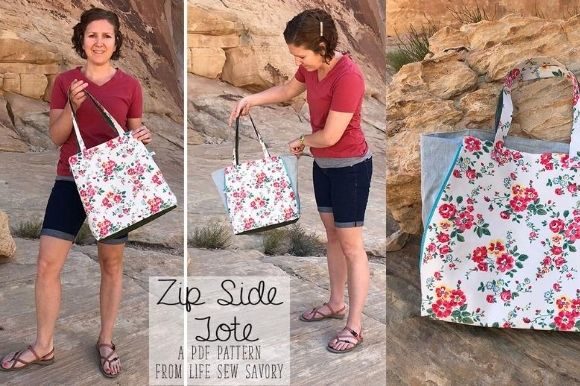
One of the most appealing strengths is the ability to change the bag's look to match your outfit, mood, or occasion without owning multiple totes. For example, you might use black vinyl on one side for a polished, weather-resistant exterior, and a floral quilting cotton on the other side for a softer, more playful style. The side zip-outs also add functional flexibility. You can keep them zipped for a clean, simple shape, or unzip them to create a wider opening that makes it easier to access larger items or store bulkier goods.
The pattern's inclusion of foam interfacing is another advantage. Many tote patterns rely on fusible fleece or batting, which can compress over time and offer less structure. Foam interfacing holds its shape better, giving the bag a firm, professional stand-up quality. This is especially important when using materials like vinyl or pleather that need support to avoid sagging. The pattern also specifies exact yardages for both 60-inch and 44-inch wide fabrics, which removes guesswork and helps with budgeting materials.
The detailed photo tutorial is a significant asset for visual learners. Written instructions alone can be ambiguous, especially when navigating steps like inserting zippers into a curved or angled seam. With 22 pages of photos, you can see exactly how each piece should align, how the zipper tape should sit, and what the finished construction looks like at critical junctures. This level of detail reduces the likelihood of mistakes and makes the pattern feel less intimidating even if you haven't worked with zippers extensively before.
Potential Challenges and Tradeoffs
No pattern is without its considerations, and the Zip Side Tote Bag Pattern has a few that deserve attention. The most obvious is material cost and sourcing. Pleather, vinyl, and laminated fabrics are typically more expensive than quilting cotton, and they require specific needle types (such as a Microtex or leather needle) and presser feet (like a walking foot or Teflon foot) to sew properly. If your sewing machine does not handle thick layers well, you may need to adjust techniques or invest in accessories. Similarly, foam interfacing can be harder to find at local fabric stores and may need to be ordered online, adding to the planning time and cost.
Zipper installation is another potential hurdle. While the tutorial guides you through the process, sewing zippers into bag sides requires careful pinning, basting, and sometimes multiple test fits. If you are not comfortable with zippers, you may need to practice on scraps first. The pattern calls for two matching zippers that are 14 to 15 inches long—a specific size that may not be in every sewing kit. You might need to trim longer zippers or find ones that fit exactly, which adds an extra step.
The bag's finished size of about 13 inches square is practical for many uses, but it may feel small if you are used to oversized totes that can hold a laptop, lunch, and gym clothes all at once. The side zip-outs add some capacity, but this is not a jumbo bag. If you need a large carryall, you might find the dimensions limiting. Similarly, the pattern's material suggestions lean toward structured fabrics; using very lightweight or flimsy lining fabric can compromise the bag's shape, as the pattern notes. This means you have less flexibility to use whatever fabric you have on hand.
Who Is This Pattern For?
The Zip Side Tote Bag Pattern is an excellent choice for sewists who have some experience under their belt and want to expand their skills. It suits anyone who values versatility in their accessories and enjoys the process of constructing a bag with multiple steps. If you like the idea of a reversible-style bag but want the stability of fixed handles and interior pockets, this pattern delivers that combination. It is also a good fit for crafters who want to use up remnants of pleather or vinyl from other projects, since the yardage needed for the sides is only half a yard and the bottom a quarter yard.
For those who appreciate thorough instruction, the 22-page photo tutorial makes this pattern approachable even if you have not sewn many bags before. The digital format means you can print the pattern pieces at home and access the tutorial immediately—no waiting for shipping. This is especially convenient if you want to start a project over a weekend and have everything ready digitally.
When You Might Look Elsewhere
If you are a complete beginner who has never sewn a zipper or worked with foam interfacing, you might find this pattern frustrating despite the tutorial's quality. A simpler tote pattern with a single fabric and no zippers could build your confidence first. Likewise, if your priority is a very large bag for heavy loads, the 13-inch square format may not meet your needs. Patterns designed for oversized totes with reinforced bottoms and longer handles would be a better match.
Budget-conscious sewists should also consider the cumulative cost of materials. A tote made entirely from quilting cotton can be quite inexpensive, while adding vinyl, foam interfacing, and two matching zippers raises the total. If you want to sew a bag primarily to save money, this pattern might not be the most economical choice. However, if you value the final look and durability, the investment can be worth it.
Making an Informed Decision
Choosing a bag pattern involves balancing your skill level, budget, desired features, and the kind of finished product you want. The Zip Side Tote Bag Pattern stands out for its dual-look design, structured build, and comprehensive photo guide. It is not the fastest or cheapest pattern available, but it offers a distinctive result that you can personalize extensively through fabric choices and interior pocket placement. If you enjoy projects that challenge you slightly and reward you with a bag that looks professional and feels substantial, this pattern is a strong candidate. For those seeking simplicity or extreme size, other designs may serve you better. Ultimately, understanding what this pattern does well and where it asks more of you will help you decide if it aligns with your sewing goals.